Spooky savings await! Shop now!
Samhain
The Ancient Festival That Still Enchants Modern Witches and Pagans
PAGAN FEST
10/25/20256 min read

Samhain
The Ancient Festival That Still Enchants Modern Witches and Pagans
As October's darkness deepens and the veil between worlds grows thin, witches and pagans worldwide prepare for one of the most sacred nights of the year: Samhain. Pronounced "SOW-in" (rhyming with "cow-in"), this ancient Celtic festival marks not only the end of the harvest season but also the pagan New Year, a time when the boundaries between the living and the dead dissolve, and magic pulses through the autumn air.
The Ancient Roots of Samhain
Samhain's origins stretch back over 2,000 years to the ancient Celts who inhabited what is now Ireland, Scotland, and the Isle of Man. For these Iron Age peoples, Samhain (which translates to "summer's end" in Old Irish) represented one of the four major fire festivals in the Celtic calendar, falling opposite Beltane on the Wheel of the Year.
The Celts observed Samhain at the midpoint between the autumn equinox and the winter solstice, typically from sunset on October 31st through November 1st. This timing was no accident, it marked the final harvest, the bringing in of livestock from pastures, and the beginning of the dark half of the year. As the earth prepared to sleep beneath winter's blanket, the Celts believed the barriers between the physical and spiritual worlds became permeable.
Ancient Samhain celebrations were both practical and mystical. Communities gathered to slaughter livestock for winter stores, extinguish their hearth fires, and relight them from a sacred communal bonfire. These bonfires served multiple purposes: they honored the sun's dwindling power, provided protection against malevolent spirits, and created a focal point for divination rituals.
The Celts believed that on this night, the Aos Sí (the spirits or fairies) walked freely among the living, and the souls of the deceased could return to visit their former homes. To appease these wandering spirits, people left offerings of food and drink outside their doors, a practice that would eventually evolve into modern trick-or-treating.
From Pagan Ritual to Modern Revival
As Christianity spread through Celtic lands, Samhain underwent a gradual transformation.
The Catholic Church established All Saints' Day (All Hallows' Day) on November 1st and All Souls' Day on November 2nd, effectively Christianizing the pagan festival. The night before became known as All Hallows' Eve, which eventually shortened to Halloween.
Despite centuries of suppression and adaptation, Samhain never truly disappeared. In rural Ireland and Scotland, many old customs persisted under Christian guise. The 20th century saw a remarkable revival as modern pagan movements, particularly Wicca and neo-druidism, reclaimed and reconstructed ancient Celtic practices.
Today, Samhain has experienced a renaissance, celebrated by an estimated 1-1.5 million pagans, Wiccans, and witches worldwide, with particularly strong followings in:
Ireland and Scotland: Where the festival originated, many people still observe
Samhain traditions alongside or instead of Halloween
United Kingdom: Home to a thriving pagan community with public
Samhain gatherings and rituals
United States: The largest pagan population outside Europe
celebrates Samhain from coast to coast
Canada, Australia, and New Zealand: Growing pagan communities adapt Samhain
to Southern Hemisphere seasons (with some celebrating in April/May instead)
Germany and Scandinavia: Where it blends
with Germanic and Nordic ancestral traditions
How Modern Witches and Pagans
Celebrate Samhain
Contemporary Samhain celebrations beautifully weave ancient practices with modern spirituality.
While traditions vary among different pagan paths, several core themes unite practitioners:
Honoring the Dead
The most sacred aspect of Samhain remains ancestor veneration.
Modern pagans create elaborate ancestor altars adorned with photographs, heirlooms, candles,
and offerings of the deceased's favorite foods or drinks.
Many hold "dumb suppers" silent meals where a place is set for departed loved ones,
allowing space for communion with those who have passed beyond the veil.
Divination and Spirit Work
With the veil at its thinnest, Samhain is considered the most powerful time for divination.
Witches pull tarot cards, scry in mirrors or dark bowls of water, cast runes,
and practice automatic writing to receive messages from the spirit world.
Some perform elaborate rituals to connect with spirit guides or receive glimpses of the year ahead.
Bonfires and Candle Magic
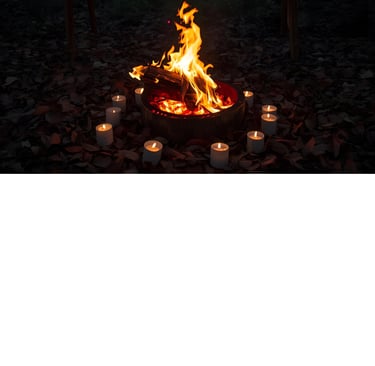
Fire remains central to Samhain observances.
Pagans gather around bonfires to release what no longer serves them,
writing intentions on paper and burning them in the flames.
Those without access to outdoor fires light candles in ritual, often black for protection,
orange for transformation, and white for spiritual connection.
Ritual and Ceremony
Covens and solitary practitioners perform Samhain rituals that typically include:
Casting a sacred circle
Calling the quarters (elemental directions)
Invoking deities associated with death and transformation (such as the Crone, Hecate, or the Morrigan)
Meditation on mortality and life's cyclical nature
Releasing the old year and welcoming the new
Nature Walks and Reflection
Many modern pagans take contemplative walks through autumn landscapes, gathering fallen leaves, acorns,
and branches for altar decorations.
This practice connects them to the seasonal shift and the earth's preparation for winter rest.
The Feast of Samhain:
Traditional Foods and Drinks
Food plays a vital role in Samhain celebrations, with many traditional dishes surviving from
Celtic times or evolving through the centuries:
Traditional Foods
Colcannon: This Irish dish of mashed potatoes with kale or cabbage, butter, and cream was a Samhain staple.
Tradition held that small charms or coins would be hidden inside,
and finding one predicted your fortune for the coming year.
Soul Cakes: Small round cakes made with spices and marked with a cross, originally given to "soulers"
who went door-to-door praying for the dead in exchange for these treats.
Apples: Sacred in Celtic tradition, apples appear everywhere at Samhain.
They're used in divination (bobbing for apples), eaten fresh, baked into pies, or made into cider.
The five-pointed star revealed when an apple is cut crosswise represents the pentacle, a powerful pagan symbol.
Root Vegetables: Turnips, beets, parsnips, and other earth, grown foods that can be stored
through winter feature prominently, symbolizing the final harvest and the earth's abundance.
Nuts: Hazelnuts particularly, associated with wisdom in Celtic lore, are roasted and eaten,
or used in divination rituals where their behavior in fire predicts romantic futures.
Pork and Game: Traditionally, livestock was slaughtered at Samhain to provide winter meat,
making pork roasts and game meats ceremonial feast foods.
Pumpkin and Squash: While more modern additions (pumpkins are native to the Americas),
these have been enthusiastically adopted into Samhain celebrations, roasted,
baked into breads, or used decoratively.
Traditional Drinks
Mulled Wine or Cider: Warm spiced beverages perfect for autumn nights,
often infused with cinnamon, cloves, nutmeg, and orange peel.
Mead: The ancient honey wine holds special significance,
connecting celebrants to their Celtic ancestors.
Wassail: A hot mulled cider tradition
that involves toasting the apple trees for future abundance.
Herbal Teas: Mugwort tea (for enhanced psychic abilities), elderberry tea (for protection),
or blends with rosehips and hibiscus warm both body and spirit.
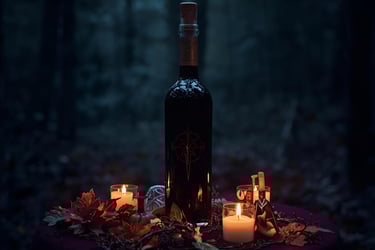
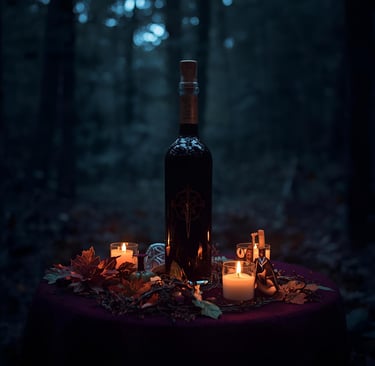
Ritual Wines: Many pagans craft special ritual wines or cordials infused with herbs like wormwood, blackberry, or elderflower specifically for Samhain ceremonies.
Samhain in Modern Society
What makes Samhain particularly fascinating is how it has re-emerged as a distinct spiritual practice even as
Halloween has become increasingly commercialized.
While mainstream society celebrates Halloween with costumes and candy, pagans and
witches observe a deeply spiritual holy day that acknowledges death as a natural part of life's cycle.
Social media has connected the global pagan community like never before,
with hashtags like #Samhain and #WitchesOfInstagram flooding with altar photos,
ritual descriptions, and shared experiences each October. This visibility has helped normalize
pagan practices and sparked interest in pre-Christian spiritualities.
Many modern pagans also appreciate that Samhain offers an alternative to the consumer-driven aspects of Halloween,
focusing instead on introspection, gratitude, ancestral connection, and the earth's natural rhythms.
It's a time to confront mortality not with fear, but with reverence,
understanding that death and rebirth are eternal partners in the dance of existence.
The Veil Grows Thin Once More
As Samhain approaches each year, witches and pagans worldwide feel the shift in energy,
the way twilight lingers a bit longer, how the wind carries whispers of things unseen,
the pull toward introspection and remembrance.
Whether celebrated in a forest grove with a coven, at a solitary home altar, or at a large public gathering,
Samhain remains what it has always been: a threshold moment.
It is a time to honor those who walked before us, to acknowledge the darkness as sacred rather than fearful,
and to trust in the wheel's eternal turning.
From its ancient Celtic origins to its vibrant modern expression,
Samhain endures as a powerful reminder that some truths are older than empires,
deeper than doctrine, and more persistent than time itself.
So as October 31st approaches, light a candle for your ancestors, leave an offering at your doorstep,
and open yourself to the magic that flows when the veil grows thin.
The old gods are stirring, the spirits are walking, and the witches are calling the year home.
Blessed Samhain to all who celebrate. May your ancestors guide you,
and may your new year be filled with magic and wisdom.
October 31st - November 1st
magicwitchsouvenirs@gmail.com
© 2025. All rights reserved.
By the way… would you like to join our haunted mailing list? We share early access to new creations, secret sales, and free journal pages each month.
We also sell on Etsy.
Click the link, To Check Out Our Store!